Grana Padano
PDO

Grana Padano: a unique product.
No other type of dairy product can use the term “grana”, which is why the name of this Italian cheese should always be given in full: Grana Padano.

But when a food’s qualities set it apart, when it becomes known and loved across the world, and when the name – Grana Padano – is used by so many people, it becomes an example of excellence, a byword for a whole category of cheeses. Here at the Consortium, though, we believe in the importance of names, and we work to make sure they are respected. Because Grana Padano PDO is much more than a name: it is the story of an exceptional cheese, the story of centuries of tradition, passion and craftsmanship.


GP_Il prodotto iconico cuore ENG mob
Icon-Ingredienti-2

Ingredients

True excellence requires few ingredients. Rennet, lysozyme, salt and the highest quality milk combine to create something magical.

Path 20171
Icon-Stagionaure

Ageing

The differing flavours of Grana Padano come from the ageing process. Different time periods, different ways to experience the wait.

Path 20171
Icon-Riconoscerlo

How to recognise it

Only the best wheels receive the fire brand, the official symbol that identifies Grana Padano PDO.

Path 20171
Icon-Degustarlo

How to taste it

There are a range of ways to experience Italian flavour. Because tasting Grana Padano is always a unique experience.

Path 20171

Presentation and Preservation

Come presentarlo 1 1

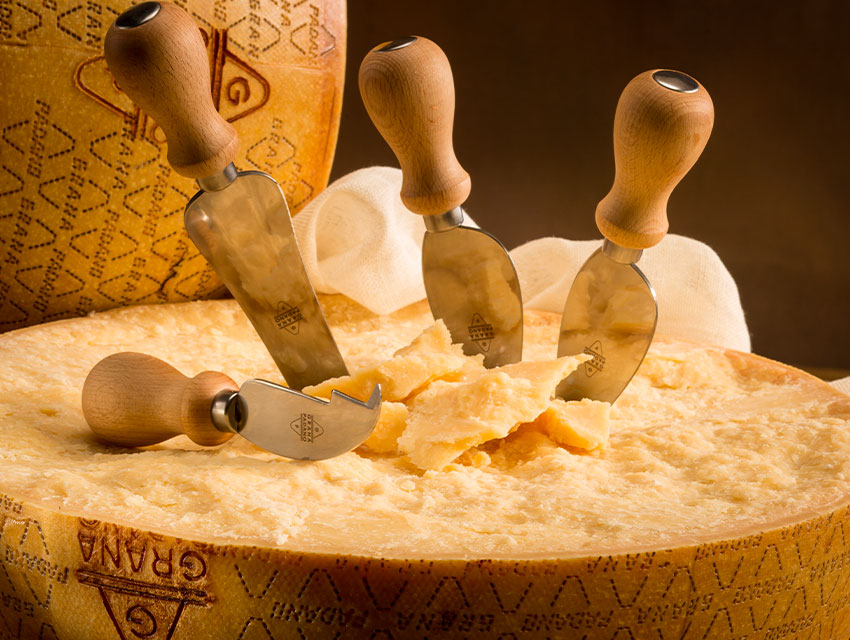
Everything starts with the right knife

Grana Padano is perfect for a shared aperitivo or at the end of a meal before the fruit.
To serve a cheeseboard with Grana Padano, you need a typical cheese knife. The tagliagrana (teardrop knife) is a knife with a short, robust blade that is ideal for slicing individual flakes of Grana Padano. To do this, the cheese should not be cut, but rather “carved” into pieces of similar size, bringing out all the fragrance and aroma of the product.

Affettagrana 1

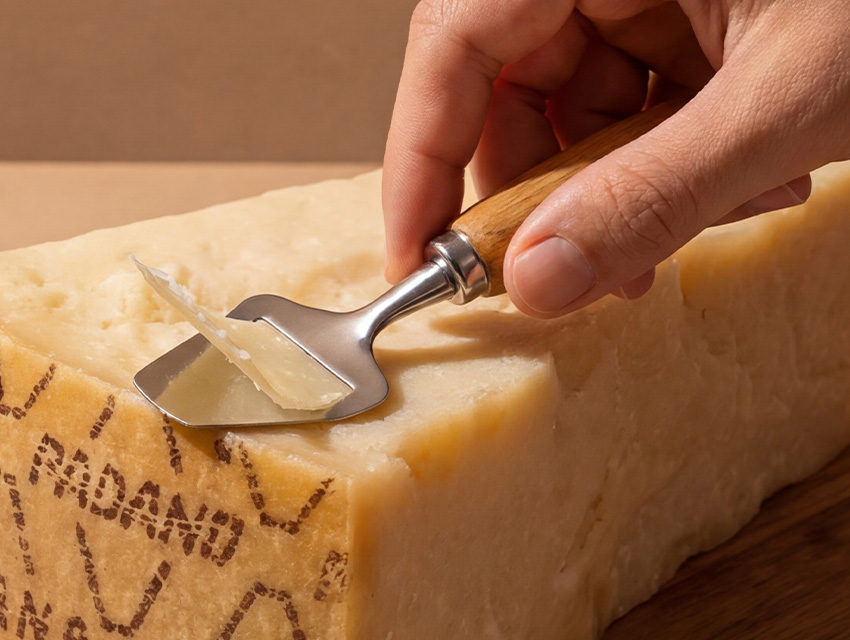
The subtle, delicate cut of the “affettagrana” blade

The “affettagrana” blade (or Grana slicer) allows you to cut ultra thin slices. For example, ultra-thin cheese “petals” to be placed on top of your dish, enriching the dish without compromising its balance.

Grattugia 1 1

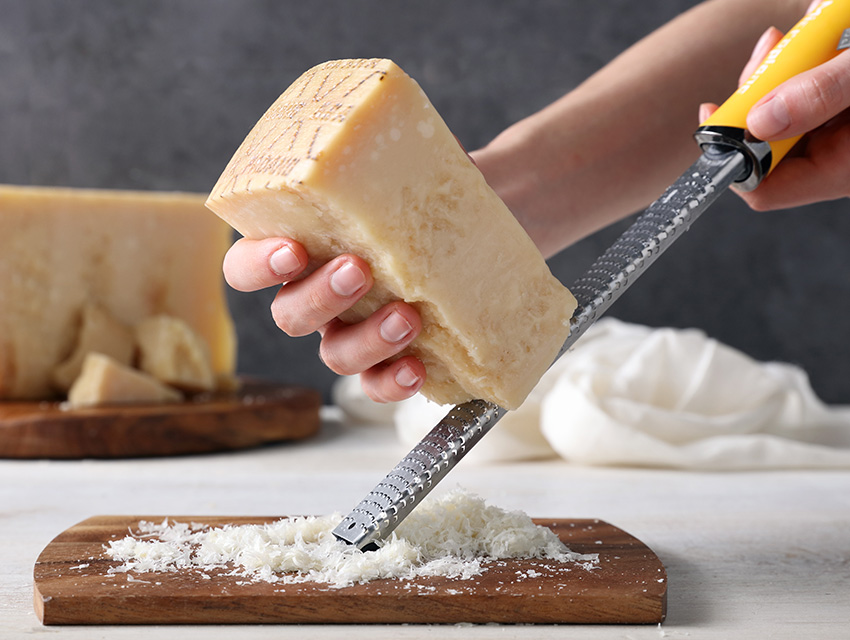
The unmistakable style of Italian food heritage

The grater is one of the main tools used to enjoy Grana Padano at its best. This classic symbol of Italian culinary tradition will magically turn its texture into a tasty, snowy powder, which will uniformly settle on your dishes with great decorative effect.

Come conservarlo 1

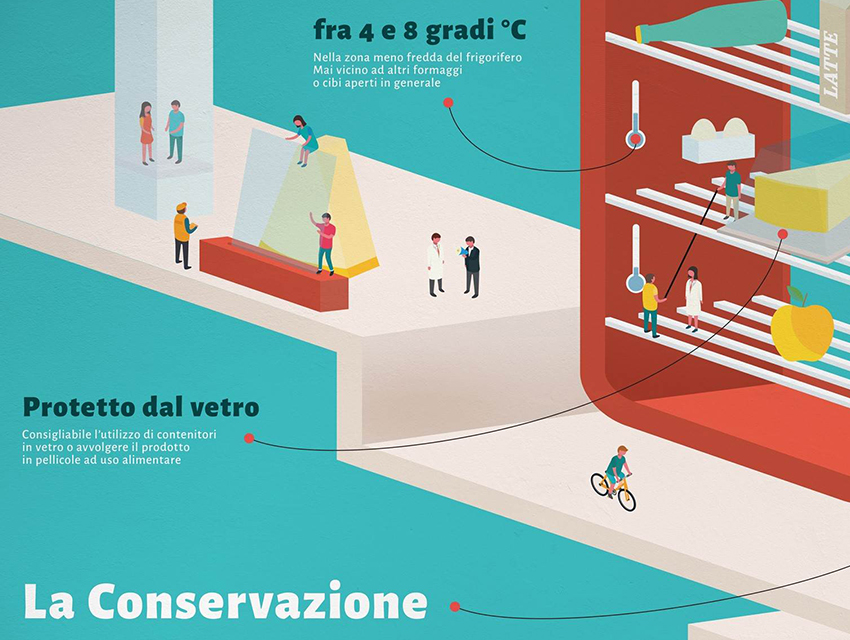
How to Store

Grana Padano should be stored in the coldest part of the refrigerator, where the temperature is usually around 8° C. Grana Padano should not be stored next to other cheeses with a different flavour and aroma, as this could affect its organoleptic qualities.
It is advisable to wrap Grana Padano in clingfilm or store it in plastic or glass containers. To enjoy Grana Padano at its best, take it out of the fridge an hour before eating, unwrap it and let it “breathe” so that it can develop its aroma and flavour to the full. Cut the cheese into bite-sized pieces just before serving to prevent them from drying out.

The world of Grana Padano

How to cut Grana Padano wheels

Opening a wheel is like a ritual, a process to be carried out with precision and care. The full wheel is cut with geometric precision using careful movements honed over time and perfected by the best master cheesemakers.
This creates the perfect “wedges”, and the ideal balance between cheese and rind, to guarantee a flavour that is a true triumph of sensations.

MG_6408

Splitting a wheel

  • Gently scratch a line with the almond shaped knife across the wheel’s diameter and down both sides.
  • Turn the wheel over and complete the line across the base.
  • Using the hooked end of the rind cutter, make a 1 cm deep cut all the way around the rind on the scored line.
  • Insert the flat spatula knife completely into the centre of the top line and an almond cutter into one corner.
  • Then insert a second almond knife or alternatively the rind cutter diagonally into the opposite corner pushing the knife handle into a horizontal position.
  • Remove all three knives, turn the cheese over and repeat the process.
  • Remove all the knives and insert two knives in the top of the cheese at either side. Push one knife forward and the other back to ease the wheel apart.
MG_6442

Half to quarters

  • To cut a half wheel into quarters, score a line along the radius of both flat ends and vertically down the side and across the cut cheese.
  • Using the hooked end of the rind cutter or the almond shaped knife, make a cut around the score to a depth of 1,5 cm.
  • Insert the spatula knife into one flat end some 5 cm in from the cut side. Insert an almond knife diagonally into the corner.
  • Remove the blades, turn the cheese over and repeat. Remove the almond knife, then twist the spatula knife to split the cheese.
MG_6460

Quarter to eighths

  • To cut a quarter into eighths, score completely around the rind as before. Ensure the rind is cut to a depth of 1,5 cm.
  • Insert both knives as shown, take out, turn the cheese over and repeat on the base.
  • Remove both knives and plunge the spatula knife into the centre of the cut line. Gently twist to ease the quarters apart.
MG_6469

Consumer portions

  • To cut eighths into consumer portions, always score a line around the cheese including through the paste on the cut surface.
  • Make a 1 cm. cut all the way around then with the cheese resting on its flat base, plunge the almond knife into the cheese and gently ease apart.
  • To cut into smaller portions, score around the end of the segment to remove the ‘pointed’ end first.
  • Thereafter divide the segment into two using same method as before, scoring the rind and paste in the same way.
  • Gently easing apart along the cut.
  • Continue to divide wedges into suitable sizes for retailing.
  • Plan your cuts on your best selling weights. Ensure each portion includes a small amount of rind.

Grana Padano and Parmigiano Reggiano:

Particular aspects and specifications

Many people also know that both these cheese are classified as “Denominazione di Origine Protetta”, i.e. Protected Designation of Origin, and also know what this means in terms of product characteristics compared with similar but generic products.

Where flavour and wellbeing meet

Grana Padano is not only delicious, it also contributes to your wellbeing! Discover the nutritional values of the world’s most popular PDO cheese.